High-Specific-Gravity Tungsten Alloy Counterweight
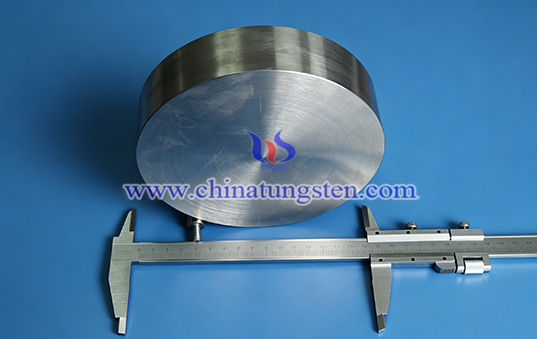
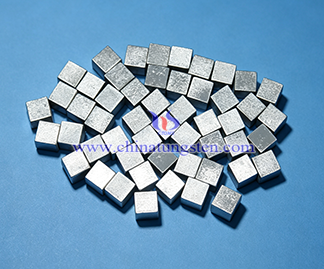
1. What's High-Specific-Gravity Tungsten Alloy Counterweight?
High-specific-gravity tungsten alloy counterweight is high-density tungsten-based alloy counterweight component with tungsten as the matrix, typically containing 90%–97% tungsten, prepared by adding binder phases such as nickel, iron or copper through powder metallurgy liquid-phase sintering. CTIA's high-specific-gravity tungsten alloy counterweight generally has a density of 16.7–18.8 g/cm³, significantly higher than traditional lead (about 11.3 g/cm³) and steel (about 7.8 g/cm³). It concentrates mass in an extremely small volume to achieve center-of-gravity adjustment, dynamic balance and vibration suppression, and is widely used in transportation, aerospace, precision instruments and high-end equipment.
2. Why Choose High-Specific-Gravity Tungsten Alloy for Counterweight?
High-specific-gravity tungsten alloy is chosen as a counterweight material because it combines high density, small volume, high strength and good machinability, meeting equipment requirements for mass configuration, balance control and long-term stable operation.
(1) High Density, Small Volume: High density means that under the same mass the volume is significantly smaller than that of steel and lead, making it suitable for space-constrained structural designs.
(2) Precise Balance, Vibration Control: The high-density characteristic concentrates mass within limited space. By adjusting counterweight position and mass distribution, center-of-gravity regulation, dynamic balance and vibration suppression can be achieved, suitable for rotating components and precision equipment.
(3) Excellent Mechanical Properties: Tensile strength of 700–1200 MPa and hardness of about 25–35 HRC, combined with good toughness and fatigue resistance, enable it to withstand high-speed rotation and alternating loads.
(4) Good Environmental Adaptability: Non-toxic and non-radioactive, with corrosion resistance and high-temperature stability, meeting long-term use requirements in medical, aerospace, precision instruments and industrial equipment fields.
3. Types of CTIA's High-Specific-Gravity Tungsten Alloy Counterweight
CTIA classifies high-specific-gravity tungsten alloy counterweight systematically according to different installation spaces and performance requirements as follows:
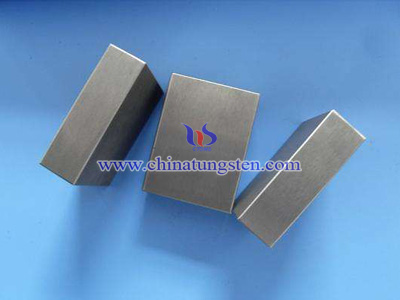
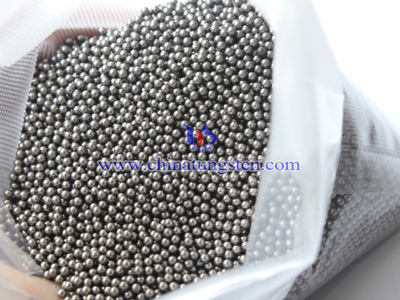
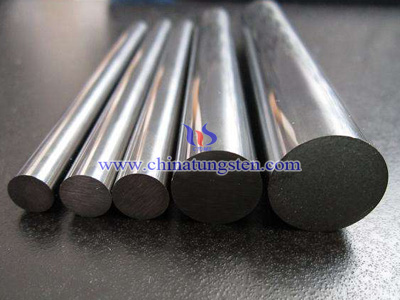
(1) Geometric Forms: Tungsten alloy block counterweight (cube), tungsten alloy rod counterweight (cylinder), tungsten alloy ball counterweight, tungsten alloy plate counterweight (disc), tungsten alloy ring counterweight, tungsten alloy fastener counterweight (screw), and customized irregular parts.
(2) Alloy Systems:
① W-Ni-Fe: High strength with certain magnetism, suitable for load-bearing and wear-resistant applications.
② W-Ni-Cu: Non-magnetic or weakly magnetic, suitable for precision instruments and medical equipment.
(3) Common Grades:
① W-Ni-Fe: 90WNiFe, 93WNiFe, 95WNiFe, 97WNiFe
② W-Ni-Cu: 90WNiCu, 95WNiCu, 97WNiCu
4. Applications of CTIA's High-Specific-Gravity Tungsten Alloy Counterweight
(1) Transportation: Applied in automotive and racing crankshafts, engines, hubs, chassis, flywheels and ship ballast counterweights to optimize mass distribution and improve operational stability.
(2) Aerospace: Used in aircraft control surfaces, helicopter rotors, satellite momentum wheels, gyroscope rotors, drones and rocket control components to achieve attitude adjustment and inertia control.
(3) Precision Electronics: Employed in mobile phone vibrators, camera gimbals and automatic watch rotors for precise mass adjustment within tiny spaces.
(4) Medical Equipment: Utilized in CT (Computed Tomography), MRI (Magnetic Resonance Imaging) and radiotherapy equipment to improve motion balance while also addressing radiation shielding needs of certain structures.
(5) Industrial Automation & Precision Equipment: Applied to machine tool spindles, centrifuges, steam turbine rotors, robots and precision instruments to reduce vibration through mass balancing and improve operating precision.
(6) Oil Drilling & Logging Equipment: Used in drilling weighted rods, logging instruments and inclinometers to provide high-quality counterweight within limited space and maintain stable tool operation.
(7) Sports Equipment: Integrated into golf club heads, dart shafts, fishing sinkers, rackets and fitness equipment to optimize center-of-gravity distribution and enhance handling performance.
5. Specifications of CTIA's High-Specific-Gravity Tungsten Alloy Counterweight
(1) Materials: W-Ni-Fe, W-Ni-Cu
(2) Dimensions: Customizable
(3) Types: Tungsten alloy block, plate, ring, rod, ball, screw, and customized parts
CTIA GROUP (CTIA) has nearly 30 years of experience in tungsten alloy manufacturing, with integrated capabilities covering powder preparation, cold isostatic pressing, liquid-phase sintering, and precision machining. CTIA provides tungsten alloy counterweights in different density grades, magnetic properties, dimensional accuracies, and structural configurations, including blocks, rods, rings, and complex irregular forms, for aerospace, medical equipment, precision instruments, and advanced equipment, meeting customer requirements for counterweight performance, machining precision, and long-term operational stability.
For any inquiry, please contact tungsten alloy manufacturer: CTIA GROUP
Email: sales@chinatungsten.com
Tel: 0086 592 5129696 / 0086 592 5129595
Website: tungsten-alloy.com
WeChat:

Related Products: