Tungsten Alloy Automotive Counterweight
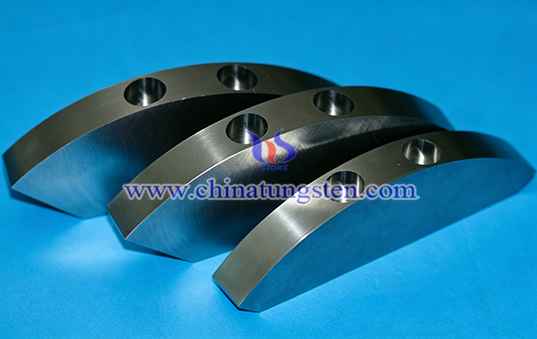
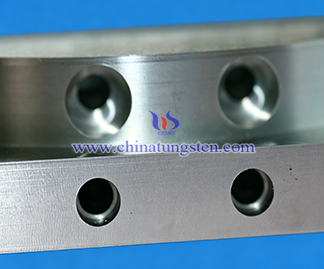
1. What's Tungsten Alloy Automotive Counterweight?
Tungsten alloy automotive counterweight is mass-balancing component used to adjust vehicle mass distribution, balance axle loads, and optimize center-of-gravity position. It is installed in the chassis, frame, wheels, engine, and other vehicle components, helping maintain driving stability, handling performance, and dynamic balance.
2. Why Do Automobiles Need Tungsten Alloy Counterweights?
Vehicle components may require additional or adjusted mass to achieve the required mass distribution, axle-load balance, and center-of-gravity position. This is particularly relevant to components with limited installation space but specific counterweight mass requirements, where tungsten alloy provides a high-density solution for concentrated mass placement.
(1) High Density and Compact Size: Tungsten alloy has a density of approximately 16.5–18.8 g/cm³, requiring less volume for the same mass and allowing greater counterweight mass to be positioned within limited installation space.
(2) Concentrated Mass and Easy Balancing: The high material density helps concentrate counterweight mass at designated positions. Proper counterweight placement can adjust front-to-rear axle loads, left-to-right loads, and vehicle center of gravity.
(3) High Strength and Good Stability: Tungsten alloy offers good strength, hardness, and wear resistance, with a coefficient of thermal expansion of approximately 4–6 × 10⁻⁶/°C, meeting automotive counterweight requirements for structural stability and service durability.
(4) Material Options and Flexible Selection: W-Ni-Fe and W-Ni-Cu provide different combinations of mechanical and magnetic properties. W-Ni-Fe offers relatively good strength, while W-Ni-Cu has low magnetic response, allowing the material to be selected according to equipment requirements and operating conditions.
3. Types of CTIA's Tungsten Alloy Automotive Counterweight
(1) Tungsten Alloy Crankshaft Counterweight: Used to balance crankshaft mass distribution, with the counterweight mass configured to improve dynamic balance during crankshaft rotation and reduce vibration caused by unbalanced mass.
(2) Tungsten Alloy Wheel Counterweight: Used for mass balancing of wheel and tire assemblies. Adjusting local mass distribution reduces rotational imbalance and improves stability during high-speed wheel rotation.
(3) Tungsten Alloy Flywheel Counterweight: Used for mass adjustment of flywheels and other rotating components, with the required mass configured according to engine and transmission system balancing requirements.
(4) Tungsten Alloy Chassis Counterweight: Installed on the chassis, frame, or other designated positions to adjust vehicle mass distribution, axle loads, and center-of-gravity position.
(5) Tungsten Alloy Body Counterweight: Installed at designated positions according to body structure and overall vehicle mass distribution requirements for mass compensation and local balancing.
(6) Customized Tungsten Alloy Automotive Counterweight: Tungsten alloy automotive counterweight can be machined into structures with holes, grooves, steps, curved surfaces, and other features, with dimensions and weight customized to suit different vehicle components and installation spaces.
4. Applications of CTIA's Tungsten Alloy Automotive Counterweight
(1) Automotive Chassis Counterweights: Installed at designated positions on the chassis and frame to adjust front-to-rear axle loads and vehicle center of gravity.
(2) Wheel and Hub Counterweights: Used for mass balancing of wheel assemblies to reduce vibration caused by rotational imbalance.
(3) Engine Counterweights: Applied to crankshafts, flywheels, and other components to improve dynamic balance in rotating systems.
(4) Automotive Structural Counterweights: Configured according to mass distribution requirements of the vehicle body and other structures for local mass compensation and balancing.
(5) Vehicle Testing Counterweights: Used during automotive development and testing to simulate different vehicle mass, axle load, and center-of-gravity conditions by adjusting counterweight mass and position.
5. Specifications of CTIA's Tungsten Alloy Automotive Counterweight
(1) Materials: W-Ni-Fe, W-Ni-Cu
(2) Tungsten Content: 90%–97%
(3) Density: 16.5–18.8 g/cm³
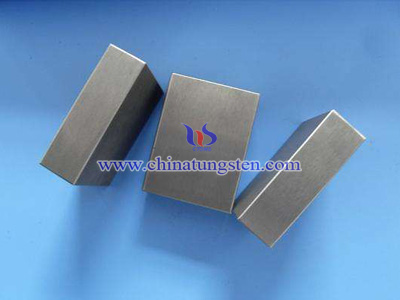
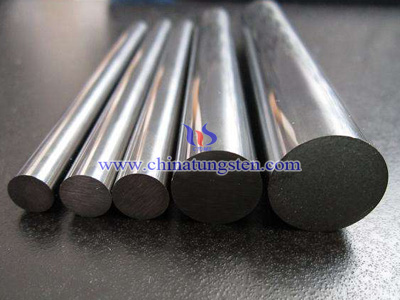
(4) Structural Forms: Tungsten alloy blocks, rods, plates, rings, and irregular structures
(5) Dimensions: Customizable
CTIA GROUP (CTIA) has nearly 30 years of experience in tungsten alloy manufacturing, with capabilities covering powder metallurgy and precision machining. CTIA provides customized tungsten alloy automotive counterweights in W-Ni-Fe and W-Ni-Cu, with block, rod, plate, ring, and complex irregular forms available to suit specific requirements for weight, density, dimensions, mounting structure, and installation precision.
For any inquiry, please contact tungsten alloy manufacturer: CTIA GROUP
Email: sales@chinatungsten.com
Tel: 0086 592 5129696 / 0086 592 5129595
Website: tungsten-alloy.com
WeChat:

Related Products: