Tungsten Alloy Aerospace Weapon Counterweight
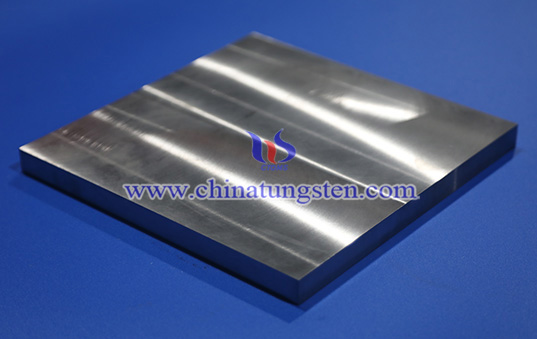
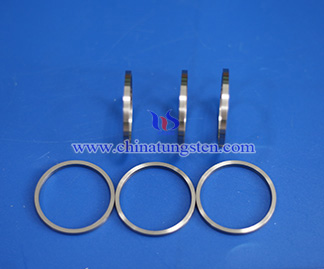
1. What's Tungsten Alloy Aerospace Weapon Counterweight?
Tungsten alloy aerospace weapon counterweight is tungsten alloy balancing weight made using tungsten as the base material and nickel, iron, copper, and other binder phases through powder metallurgy. CTIA's tungsten alloy counterweight can be used in aerospace weapons and related airborne equipment for mass compensation, center-of-gravity adjustment, and mass distribution adjustment, making it suitable for space-limited and compact installation locations.
2. Features of CTIA's Tungsten Alloy Aerospace Weapon Counterweight
(1) High Density, Compact Size: Density is 16.5–18.8 g/cm³, requiring less volume at the same mass. This makes the counterweight suitable for space-limited locations inside aerospace weapon systems, with concentrated mass achieved through dimensional design.
(2) High Strength, Mechanical Load Resistance: High tensile strength and hardness enable the counterweight to withstand mechanical loads, vibration, and impact during assembly, movement, and flight, making it suitable for counterweight locations with structural strength requirements.
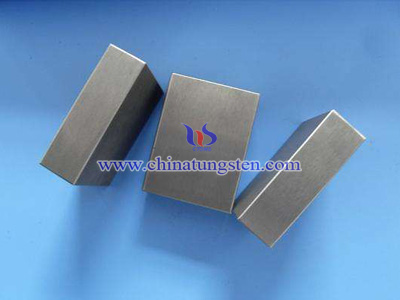
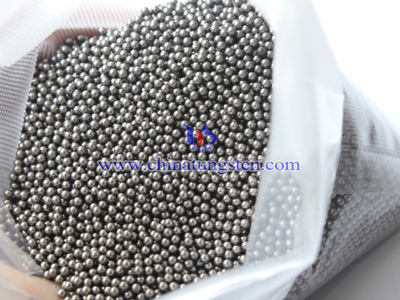
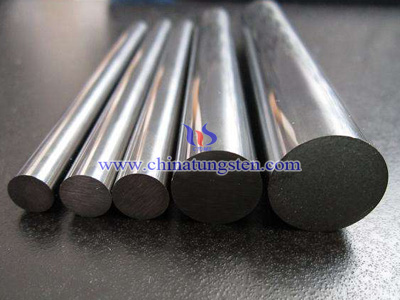
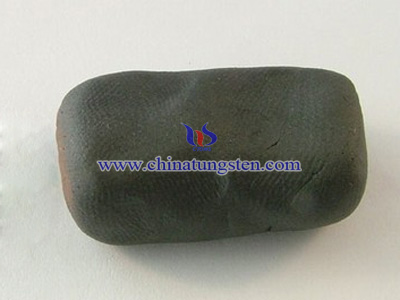
(3) Diverse Structural Forms, Easy Assembly: Available forms include blocks, rods, plates, rings, and irregular structures, with mounting holes, slots, chamfers, and other assembly features machined to suit different installation methods.
(4) Selectable Material Systems, Adjustable Magnetic Properties: W-Ni-Fe offers good strength and mechanical properties, while W-Ni-Cu has a lower magnetic response for applications with magnetic-property requirements.
(5) Controllable Machining Accuracy, Precise Counterweighting: Turning, milling, and grinding control dimensions, geometrical tolerances, and mass deviation to meet counterweight accuracy requirements.
3. Applications of CTIA's Tungsten Alloy Aerospace Weapon Counterweight
(1) Weapon Mounting Systems: Used for weapon pylons, mounting points, load-bearing components, and release mechanisms, serving mass distribution and center-of-gravity adjustment functions.
(2) Flight Control Systems: Used for control surfaces, actuators, control components, and moving parts to achieve inertial compensation and motion balancing.
(3) Guidance and Navigation Systems: Used for seekers, inertial measurement units, and navigation components to meet structural counterweighting and center-of-gravity correction requirements.
(4) Airborne Artillery Systems: Used for aircraft guns, turrets, gun mounts, and rotating mechanisms to adjust the dynamic balance of rotating components.
(5) UAV Weapon Systems: Used for weapon mounting systems, release mechanisms, load-bearing structures, and airborne components to adjust the overall or local center of gravity.
(6) Aerospace Propulsion and Airborne Equipment: Used for engines, rotating components, balancing components, and other airborne equipment to achieve component counterweighting and balance correction.
4. Specifications of CTIA's Tungsten Alloy Aerospace Weapon Counterweight
(1) Material: W-Ni-Fe, W-Ni-Cu
(2) Tungsten Content: 90%–97%
(3) Density: 16.5–18.8 g/cm³
(4) Structure: Block, rod, plate, ring, and irregular structures
(5) Dimensions: Customizable
(6) Surface Treatment: Customizable
CTIA GROUP (CTIA) has nearly 30 years of experience in tungsten alloy manufacturing and provides customized services from material selection and structural design to precision machining based on the installation space, mass, and accuracy requirements of aerospace weapon systems, with strict control of density, dimensions, and geometrical tolerances to meet the assembly requirements of different counterweight components.
For any inquiry, please contact tungsten alloy manufacturer: CTIA GROUP
Email: sales@chinatungsten.com
Tel: 0086 592 5129696 / 0086 592 5129595
Website: tungsten-alloy.com
WeChat:

Related Products: