Tungsten Alloy Screw Counterweight
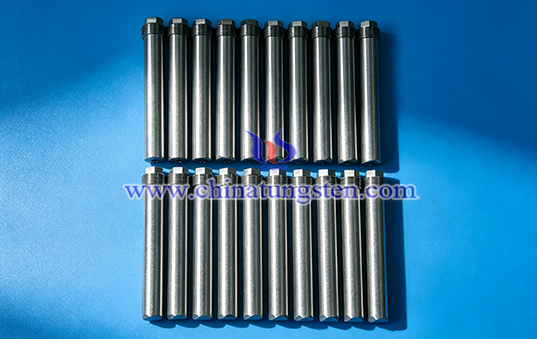
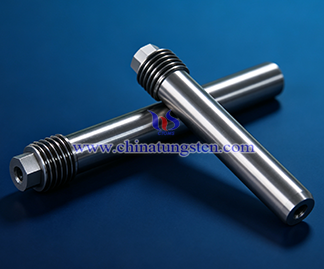
1. What's Tungsten Alloy Screw Counterweight?
Tungsten alloy screw counterweight is designed as a threaded mass-adjustment component, combining the high density of tungsten alloy with a screw-based fastening structure. CTIA's tungsten alloy screw counterweight can be installed directly into threaded holes or mounting interfaces, allowing local weight to be added, removed, or adjusted without changing the overall structure of the equipment. It is suitable for mechanical and precision equipment requiring accurate mass distribution, center-of-gravity adjustment, or component balancing.
2. Features of CTIA's Tungsten Alloy Screw Counterweight
(1) High Density, Small Volume: Density is typically 16.2–18.75 g/cm³, approximately 2–2.5 times that of steel and 1.5 times that of lead. Under the same mass the volume is smaller, suitable for precision counterweighting in space-constrained environments.
(2) Excellent Mechanical Properties: Tensile strength can reach 700–1200 MPa with relatively high hardness, wear resistance and impact resistance. It withstands vibration and relatively large torque, and the thread is less prone to deformation.
(3) High-Temperature Resistance and Thermal Stability: Maintains good strength and structural stability in high-temperature environments. Low coefficient of thermal expansion helps reduce dimensional changes and counterweight position shifts caused by temperature variation.
(4) Corrosion Resistance and Environmental Friendliness: Offers good resistance to seawater, acid and alkali corrosion. Free of lead and radioactive materials, it can replace lead counterweight components and meet environmental requirements.
(5) Precise Thread Adjustment: Installation position and effective counterweight mass can be changed by screwing in or out. Convenient for installation, removal and fine adjustment, suitable for structures requiring precise counterweighting.
3. Applications of CTIA's Tungsten Alloy Screw Counterweight
(1) Automotive & Racing: Used in rim, crankshaft and suspension system counterweighting to optimize component mass distribution.
(2) Mechanical Equipment: Used in rotors, spindles and motion mechanisms to compensate local mass and improve operational balance.
(3) Aerospace: Used in rotors, propellers and precision motion components to meet compact counterweighting needs.
(4) Precision Instruments: Used in optical platforms, motion mechanisms and inertial components for fine adjustment of mass and center of gravity.
(5) Robotics & Automation Equipment: Used in joints, end effectors and moving components to improve center-of-gravity configuration and motion stability.
(6) Sports Equipment: Used in golf clubs, club heads and other equipment requiring weight distribution adjustment.
(7) Electronic Devices: Used in small motion mechanisms and precision assemblies to achieve local counterweighting within limited space.
4. Specifications of CTIA's Tungsten Alloy Screw Counterweight
(1) Materials: W-Ni-Fe, W-Ni-Cu
(2) Tungsten Content: Typically 90%–97%
(3) Density: Typically 16.5–18.8 g/cm³
(4) Thread Specifications: M2–M40, customizable
(5) Shaft Dimensions: Diameter, length and thread length customizable
CTIA GROUP (CTIA) has been deeply engaged in tungsten alloy manufacturing field for nearly 30 years and possesses powder metallurgy forming and precision machining capabilities. CTIA customizes the material, weight, thread, shaft dimensions, and machining tolerances of tungsten alloy screw counterweights to match different mounting structures and weight-adjustment requirements, providing solutions for automotive, mechanical equipment, aerospace, precision instruments, and automation equipment.
For any inquiry, please contact tungsten alloy manufacturer: CTIA GROUP
Email: sales@chinatungsten.com
Tel: 0086 592 5129696 / 0086 592 5129595
Website: tungsten-alloy.com
WeChat:

Related Products: