Tungsten Alloy Camera Counterweight
1. What’s Tungsten Alloy Camera Counterweight?
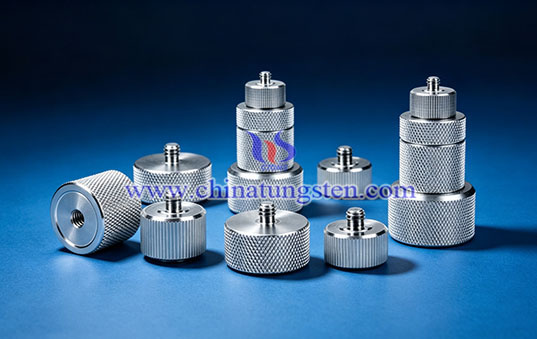
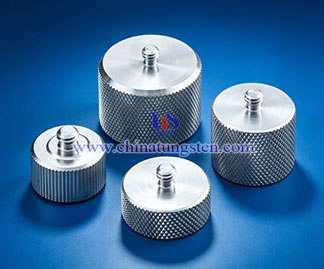
Tungsten alloy camera counterweight is high-specific-gravity counterweight made from tungsten heavy alloy for adjusting the mass distribution and center of gravity of cameras, lenses and stabilizer systems. CTIA's tungsten alloy camera counterweight is produced through powder metallurgy using tungsten as the matrix with nickel, iron or copper as binder phases. The high density of tungsten alloy allows the required counterweight mass to be concentrated into a compact volume, while the counterweight can be installed at specific positions on camera bodies, lens rings, stabilizer arms and tripod bases to achieve the required balancing effect.
2. Features of CTIA’s Tungsten Alloy Camera Counterweight
(1) High Density, Compact Counterweight Size: Density is typically 16.5–18.8 g/cm³, approximately 6–7 times that of aluminum alloy counterweights and about twice that of stainless steel counterweights. The same counterweight mass can be achieved with less volume, reducing installation space requirements in cameras, lenses and stabilizer systems.
(2) High Strength, Impact and Wear Resistance: Tensile strength typically reaches 700–1400 MPa, with hardness above 300 HV, providing resistance to impact, wear and repetitive mechanical loads during handheld, shoulder-mounted, mobile shooting and frequent installation or removal.
(3) Controllable Mass Distribution, Flexible Balancing Adjustment: The mass distribution and center of gravity of a camera system can be adjusted through counterweight mass, shape, thickness and installation position. Weight modules such as 12 g, 60 g, 100 g, 200 g and 320 g can be provided for different balancing requirements.
(4) Flexible Machining, Strong Structural Adaptability: Supports turning, milling, grinding, drilling and thread tapping for blocks, discs, curved plates, rings and irregular structures tailored to different mounting configurations.
(5) Dimensional Stability, Stable Positioning: The linear thermal expansion coefficient is typically about 4.8–5.5×10⁻⁶/K. Limited dimensional changes with temperature variation help maintain stable counterweight positioning and balancing conditions.
(6) Selectable Magnetic Properties for Magnetically Sensitive Equipment: W-Ni-Fe suits general photography equipment, while W-Ni-Cu offers low magnetic response, with some grades having relative magnetic permeability close to 1 for magnetically sensitive applications.
(7) Lead-Free Material for Environmental Requirements: The lead-free tungsten alloy material system is suitable for photography equipment subject to material safety and environmental requirements.
3. Applications of CTIA’s Tungsten Alloy Camera Counterweight
(1) DSLR and Mirrorless Cameras: Used to adjust the mass distribution of camera bodies, lenses and accessories, improving overall center-of-gravity positioning and handling with different lens combinations.
(2) Telephoto Lenses and Lens Assemblies: Used to compensate for concentrated mass at the front of lenses and adjust the front-to-rear center of gravity of camera-lens combinations, improving balance during handheld or supported shooting.
(3) Cinema Cameras: Used as counterweights on cinema cameras and large-format photography equipment, including camera bodies, lens supports and accessory mounting structures, to adjust mass distribution and center of gravity for different combinations of lenses, viewfinders and accessories.
(4) Professional Video Cameras: Used for mass adjustment in broadcast cameras and professional video equipment, improving mass distribution among camera bodies, lenses, shoulder supports and monitors.
(5) Camera Stabilizers and Gimbals: Used as side counterweights to adjust the center of gravity of cameras, lenses and accessories, improving load balance and motion stability during stabilizer and gimbal operation.
(6) Action Cameras and Compact Photography Equipment: Used where concentrated mass is required within limited installation space to adjust overall equipment balance without significantly increasing component volume.
(7) Camera Accessories and Modified Structures: Used in quick-release plates, lens supports, extension bases, handles and shoulder supports to add localized mass according to the installation position and target weight, supporting camera system balancing.
4. Specifications of CTIA’s Tungsten Alloy Camera Counterweight
(1) Material: W-Ni-Fe, W-Ni-Cu
(2) Tungsten Content: 90–97%
(3) Density: 16.5–18.8 g/cm³
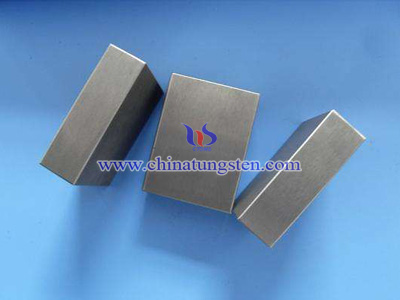
(4) Product Forms: Tungsten alloy blocks, discs, cylinders, curved plates and customized structures
(5) Dimensions: Customizable
(6) Surface Condition: Precision-ground or polished, customizable
With nearly 30 years of experience in tungsten alloy manufacturing, CTIA GROUP (CTIA) has capabilities in powder metallurgy and precision machining. CTIA provides customized tungsten alloy counterweights according to target mass, center-of-gravity position, installation space and mounting structure, supporting W-Ni-Fe and W-Ni-Cu materials as well as block, disc, curved and irregular structures for camera bodies, lenses, stabilizers and professional photography equipment.
For any inquiry, please contact tungsten alloy manufacturer: CTIA GROUP
Email: sales@chinatungsten.com
Tel: 0086 592 5129696 / 0086 592 5129595
Website: tungsten-alloy.com
WeChat:

Related Products: