How to Choose Tungsten Alloy Counterweight?
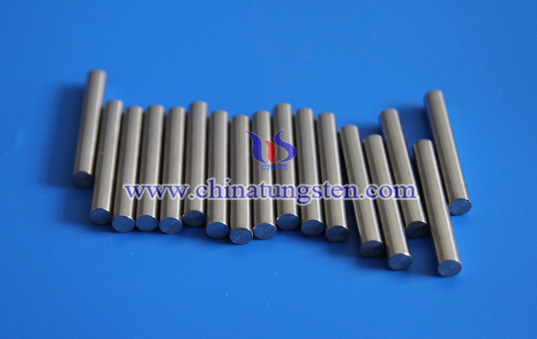
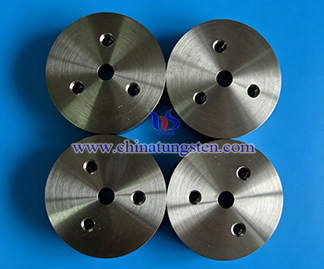
How to choose tungsten alloy counterweight? Selecting the right tungsten alloy counterweight requires consideration of target mass, installation space, material properties, and operating conditions. Tungsten-Nickel-Iron (W-Ni-Fe) and Tungsten-Nickel-Copper (W-Ni-Cu) alloys typically have densities of 16.5–18.8 g/cm³, making them suitable for applications requiring substantial mass in a compact space. CTIA provides material selection, structural design, precision machining, and tailored tungsten alloy counterweight solutions to adjust equipment center of gravity, balance rotating components, and optimize mass distribution.
To choose tungsten alloy counterweight effectively, start by evaluating the following key factors.
1. Key Factors in Selecting CTIA's Tungsten Alloy Counterweight
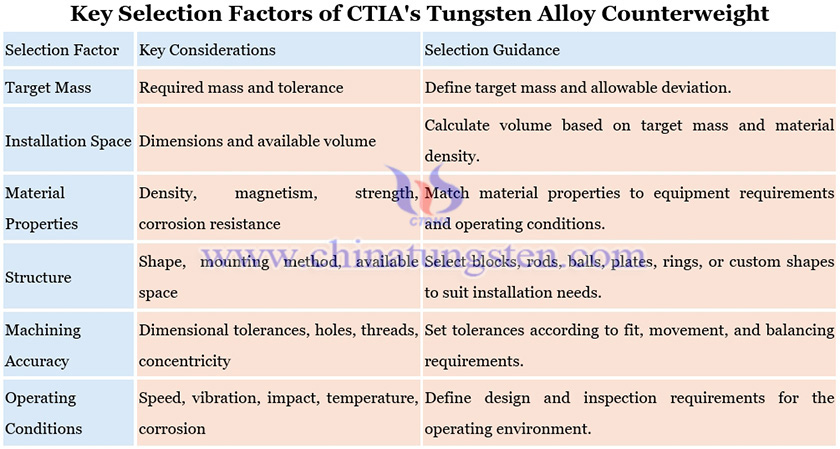
Selecting tungsten alloy counterweight requires consideration of target mass, installation space, material properties, structural design, machining accuracy, and operating conditions. Key selection factors of CTIA's tungsten alloy counterweight are shown in the picture below:
2. How to Select Material Systems and Density Grades?
(1) Match Density to Target Mass and Installation Space
Common tungsten alloy counterweight grades include 90W, 93W, 95W, and 97W. Tungsten content and binder-phase composition affect material density, with common grades typically ranging from approximately 16.5 to 18.8 g/cm³. For the same target mass, higher density generally means a smaller required volume.
The theoretical volume can be calculated using the formula: V = m / ρ
Where:
V = Volume (cm³)
m = Target mass (g)
ρ = Material density (g/cm³)
For example, tungsten alloy with a density of 17.5 g/cm³ requires a theoretical volume of approximately 28.6 cm³ to achieve a mass of 500 g. The final dimensions must also account for holes, grooves, chamfers, and other mounting features.
(2) Select Material Systems According to Magnetic and Mechanical Requirements
W-Ni-Fe alloys offer good overall mechanical properties and are suitable for counterweights in automotive components, industrial machinery, and rotating assemblies. W-Ni-Cu alloys generally exhibit a lower magnetic response and may be suitable for equipment sensitive to magnetic interference. Specialized applications such as Magnetic Resonance Imaging (MRI) require material suitability to be verified against the magnetic environment, specific alloy grade, and test results.
3. How to Determine Counterweight Geometry and Machining Accuracy?
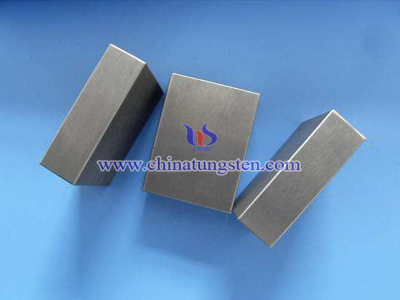
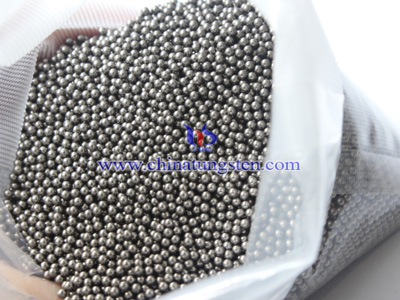
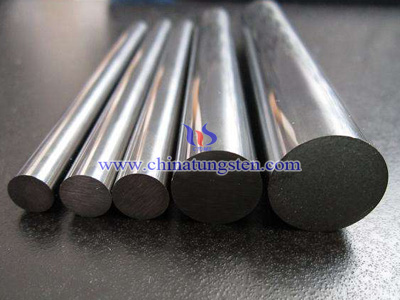
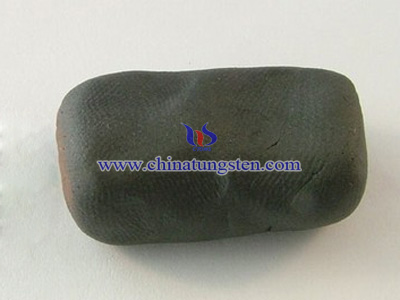
To choose tungsten alloy counterweight for specific applications, match the component geometry to the required mass distribution, installation space, and mounting method. Blocks provide localized mass adjustment, while rods and rings suit shafts and rotating assemblies. Balls, plates, and customized components accommodate different structural requirements. Specifications should define overall dimensions, hole locations, threads, mounting features, and critical tolerances to ensure proper fit and prevent installation interference.
For rotating equipment, centrifugal force can be estimated using the following formula: F = m × e × ω²
Where:
F = Centrifugal force (N)
m = Unbalanced mass (kg)
e = Eccentricity (m)
ω = Angular velocity (rad/s)
Under otherwise identical conditions, higher rotational speed produces greater centrifugal force for the same eccentricity and unbalanced mass. High-speed counterweights therefore require careful control of mass and dimensions, along with defined limits for residual unbalance, balancing grade, and inspection standards. Target mass, mounting structure, and dynamic balancing requirements should be evaluated together rather than selecting the final design based on material density alone.
CTIA GROUP (CTIA) has nearly 30 years of experience in tungsten alloy manufacturing and provides counterweight design and precision machining using material systems such as W-Ni-Fe and W-Ni-Cu. CTIA's customized solutions include blocks, rods, balls, plates, rings, and irregularly shaped components tailored to target mass, installation space, magnetic properties, and dimensional tolerances, supporting applications in industrial machinery, automotive components, aerospace equipment, medical devices, and oilfield instruments.
For any inquiry, please contact tungsten alloy manufacturer: CTIA GROUP
Email: sales@chinatungsten.com
Tel: 0086 592 5129696 / 0086 592 5129595
Website: tungsten-alloy.com
WeChat:

Related Products: