Tungsten Alloy Counterweight in Defense & Military
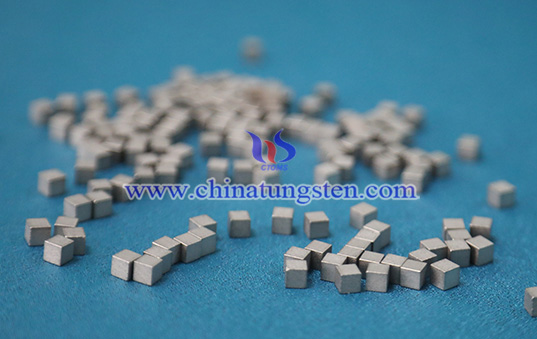
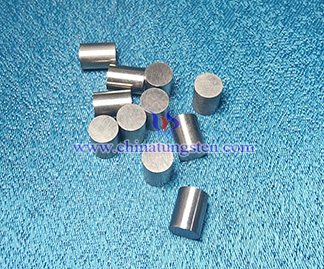
Tungsten alloy counterweight is mass-balancing component installed in aerospace equipment, naval and marine equipment, missile guidance systems, ground combat equipment, and other defense and military equipment, mainly used for mass compensation, center-of-gravity adjustment, moment-of-inertia control, and motion balancing. CTIA's tungsten alloy counterweight uses tungsten as the matrix with nickel, iron, or copper as binder phases and is produced through powder metallurgy processes, featuring high density, high strength, non-toxicity, non-radioactivity, and good corrosion resistance while providing precise mass compensation and attitude control under complex operating conditions involving high overloads, severe impact, and temperature variations.
1. Features of CTIA's Tungsten Alloy Counterweight in Defense & Military
(1) High Density for Compact Counterweighting: Density is typically 16.5–18.8 g/cm³, providing high mass per unit volume and allowing the required mass to be configured within limited installation space. Adjusting counterweight mass, position, and structural dimensions enables center-of-gravity compensation, mass distribution adjustment, and moment-of-inertia control.
(2) High Strength for Impact and Vibration Resistance: Tensile strength can reach 700–1200 MPa, allowing the counterweight to withstand vibration and dynamic loads generated during equipment movement, launching, maneuvering, and operation.
(3) Non-Toxic and Non-Radioactive for Safer Use: Tungsten alloy is non-radioactive and does not present the toxicity concerns associated with lead materials, making it suitable for applications with requirements for personnel safety, environmental safety, and material compliance.
(4) Optional Non-Magnetic Properties for Magnetically Sensitive Systems: W-Ni-Cu tungsten alloy is non-magnetic, with relative magnetic permeability close to 1, making it suitable for inertial navigation systems, magnetically sensitive instruments, radar, and optoelectronic equipment requiring controlled magnetic properties. W-Ni-Fe tungsten alloy is suitable for general structural counterweighting and components requiring higher strength.
(5) Dimensional Stability for Temperature Variations: Tungsten alloy has a relatively low coefficient of thermal expansion, resulting in relatively small dimensional changes with temperature variations and helping maintain stable counterweight position, assembly clearances, and mass distribution.
(6) Wear and Corrosion Resistance for Complex Environments: High hardness and wear resistance make tungsten alloy suitable for rotating, contacting, and frequently moving components. Precision machining or appropriate surface treatment can improve surface quality and corrosion resistance under complex operating conditions.
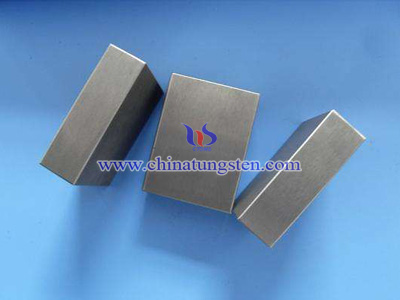
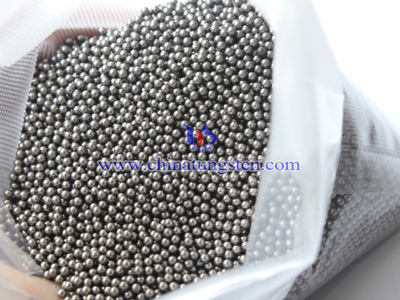
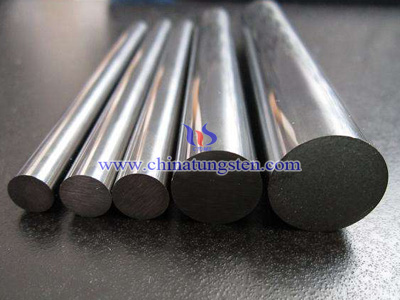
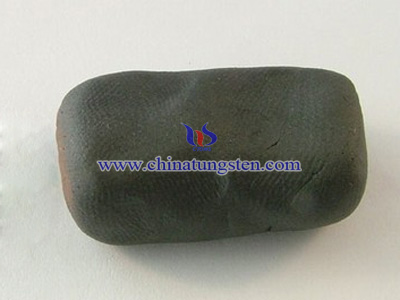
(7) Flexible Structures for Precision Customization: Tungsten alloy counterweights can be machined into blocks, rods, discs, rings, balls, and irregular structures, with holes, grooves, threads, steps, and locating features customized to meet different installation and mass-configuration requirements of defense and military equipment.
2. Applications of CTIA's Tungsten Alloy Counterweight in Defense & Military
(1) Aircraft and Flight Vehicles: Used in control surfaces, ailerons, rotor systems, flight-control mechanisms, and inertial components of military aircraft, helicopters, and unmanned aerial systems.
(2) Missiles and Guidance Systems: Used for body mass compensation, actuator mechanisms, inertial measurement components, gyroscope rotors, and precision control components.
(3) Naval and Deep-Sea Equipment: Used for attitude adjustment and motion balancing in shipborne radar platforms, stabilization mechanisms, diving equipment, and deep-sea exploration equipment.
(4) Ground Combat Vehicles and Artillery Equipment: Used for mass configuration in armored vehicles, tracked vehicles, turret rotation mechanisms, artillery moving components, and automatic loading mechanisms.
(5) Optoelectronic Equipment: Used in electro-optical gimbals, stabilization platforms, night-vision equipment, laser rangefinders, and other precision rotating components.
(6) Unmanned Equipment: Used in the bodies, gimbals, power components, and motion mechanisms of military unmanned aerial vehicles, unmanned ground vehicles, and other unmanned systems.
(7) Precision Defense and Military Equipment: Used in servo mechanisms, actuators, rotating components, and other equipment requiring mass balance and motion stability.
3. Specifications of CTIA's Tungsten Alloy Counterweight in Defense & Military
(1) Material: W-Ni-Fe, W-Ni-Cu
(2) Tungsten Content: 90%–97%
(3) Density: 16.5–18.8 g/cm³
(4) Dimensions: Customizable
(5) Product Forms: Counterweight blocks, counterweight rods, counterweight rings, counterweight plates, counterweight balls, and customized irregular components
(6) Structural Forms: Perforated, slotted, threaded, and combined structures
(7) Surface Finish: Ground, polished, or customized
CTIA GROUP (CTIA) has nearly 30 years of experience in tungsten alloy manufacturing, supported by an integrated production system covering powder preparation and formulation, liquid-phase sintering, and precision machining. CTIA provides material solutions tailored to defense and military equipment requirements for impact resistance, corrosion resistance, and controlled magnetic properties, with precise control of material density uniformity and internal densification, together with customized geometric structures and dimensional tolerances to meet the demanding requirements of aerospace and other defense and military applications.
For any inquiry, please contact tungsten alloy manufacturer: CTIA GROUP
Email: sales@chinatungsten.com
Tel: 0086 592 5129696 / 0086 592 5129595
Website: tungsten-alloy.com
WeChat:

Related Products: