Tungsten Alloy Aerospace Counterweight
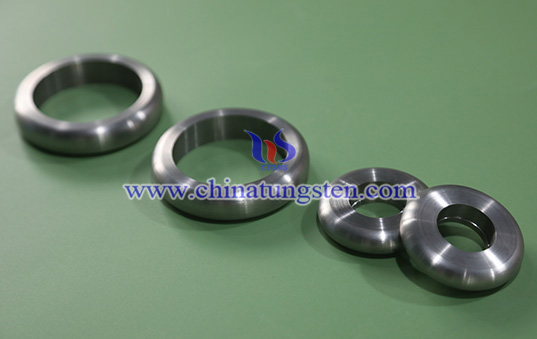
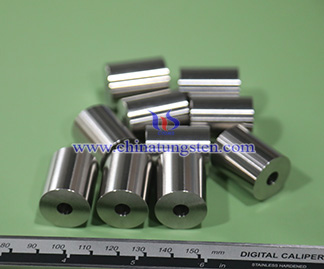
1. What's Tungsten Alloy Aerospace Counterweight?
Tungsten alloy aerospace counterweight is high-specific-gravity tungsten alloy component used for mass compensation, center-of-gravity adjustment, and dynamic balancing in aircraft, satellites, and spacecraft. CTIA's tungsten alloy counterweight uses tungsten as the matrix, typically with 90%–97% tungsten and nickel, iron, or copper as binder phases, and is produced through powder metallurgy. Its high density allows substantial mass to be concentrated within limited space, meeting aerospace requirements for space utilization, mass distribution, and rotational balance.
2. Features of CTIA's Tungsten Alloy Aerospace Counterweight
(1) High Density, Compact Installation: A typical density of 16.5–18.8 g/cm³ enables substantial mass to be concentrated within compact installation spaces, making it suitable for compact structures inside aircraft, satellites, and spacecraft.
(2) High Strength, Complex Load Resistance: Tensile strength typically exceeding 700 MPa and hardness of approximately 25–35 HRC support resistance to vibration, impact, centrifugal force, and cyclic loads during flight and operation.
(3) Low Thermal Expansion, Dimensional Stability: A coefficient of linear thermal expansion of approximately 4.4–5.5 × 10⁻⁶/K limits dimensional changes under temperature variations, helping maintain stable counterweight positioning, mass distribution, and rotational balance.
(4) Good Corrosion Resistance, Complex-Environment Adaptability: Good environmental stability, together with surface protection selected according to operating conditions, improves corrosion and wear resistance for long-term aerospace service.
(5) Concentrated Mass, Easy Adjustment: Compact mass concentration, combined with adjustable counterweight mass, installation position, and structural dimensions, enables changes in local mass distribution and moment of inertia for aircraft center-of-gravity adjustment and balancing of rotors, reaction wheels, and other rotating components.
(6) Flexible Alloy Systems, Magnetic Property Options: W-Ni-Fe offers good strength and machinability with weak ferromagnetic properties, while W-Ni-Cu provides non-magnetic properties for applications requiring low magnetic response.
3. Applications of CTIA's Tungsten Alloy Aerospace Counterweight
(1) Aircraft Control Surfaces: Installed on rudders, elevators, ailerons, and other control surfaces to adjust their center of gravity through appropriate mass distribution, improving inertial characteristics and flight stability.
(2) Helicopter Rotor Systems: Installed in high-speed rotating components such as rotors and rotor blades to adjust local mass distribution, reduce rotational eccentricity and vibration, and improve rotor operating stability.
(3) Aircraft Engine Rotors: Used in rotors, impellers, and other high-speed rotating components to precisely correct rotor imbalance, reducing vibration and additional loads during high-speed operation.
(4) Satellite Momentum Wheels and Reaction Wheels: Used for mass and inertia distribution in wheel bodies and rotor assemblies, adjusting mass distribution to control moment of inertia and rotational characteristics and provide a stable rotational basis for spacecraft attitude control.
(5) Gyroscopes and Inertial Devices: Used in precision rotating mechanisms such as gyroscope rotors and inertial measurement assemblies to control mass distribution and moment of inertia, improving rotational accuracy and reducing the effects of eccentricity on measurement performance.
(6) Spacecraft: Used for mass distribution inside satellites, space probes, and other spacecraft, adjusting local mass and center-of-gravity positions according to overall equipment layout and supporting overall mass-property design.
4. Specifications of CTIA's Tungsten Alloy Aerospace Counterweight
(1) Material: W-Ni-Fe, W-Ni-Cu
(2) Tungsten Content: 90%–97%
(3) Density: 16.5–18.8 g/cm³
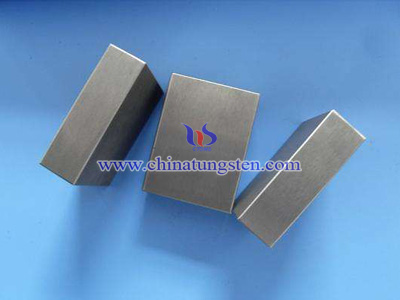
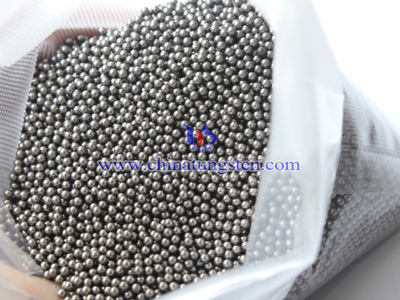
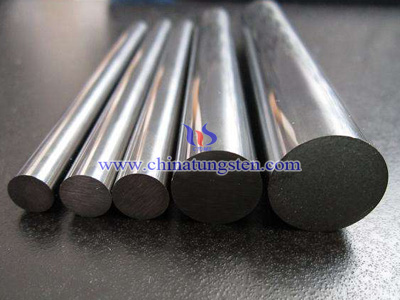
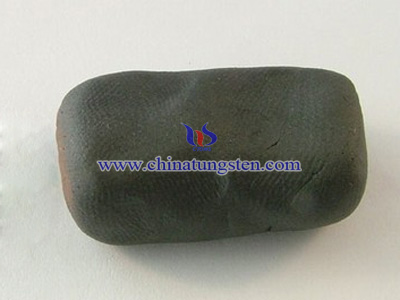
(4) Shapes: Blocks, plates, rods (cylinders), rings, balls (spheres), and irregular structures
(5) Dimensions: Customizable
(6) Surface Condition: Ground or polished, Ra ≤ 0.8 μm; precision parts can reach Ra ≤ 0.4 μm
With nearly 30 years of experience in tungsten alloy manufacturing, CTIA GROUP (CTIA) has capabilities in powder metallurgy and precision machining. CTIA provides tungsten alloy counterweight solutions with controlled density, mass deviation, dimensional tolerances, and machining precision to meet the mass distribution, installation space, structural dimensions, and balancing accuracy requirements of aerospace components, including aircraft control surfaces, rotors, engine rotors, satellite momentum wheels, and inertial equipment.
For any inquiry, please contact tungsten alloy manufacturer: CTIA GROUP
Email: sales@chinatungsten.com
Tel: 0086 592 5129696 / 0086 592 5129595
Website: tungsten-alloy.com
WeChat:

Related Products: