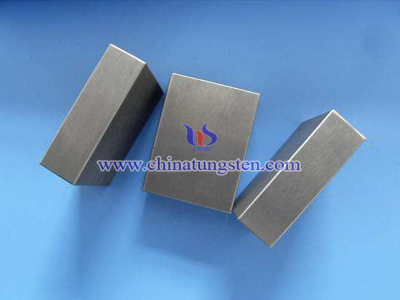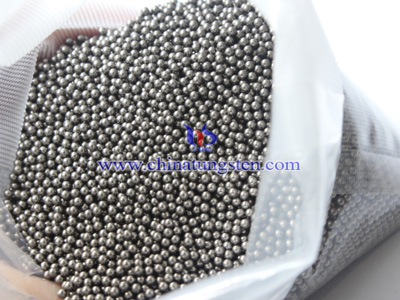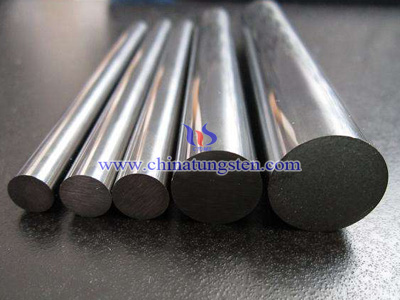
Tungsten Alloy Counterweight Materials and Grades
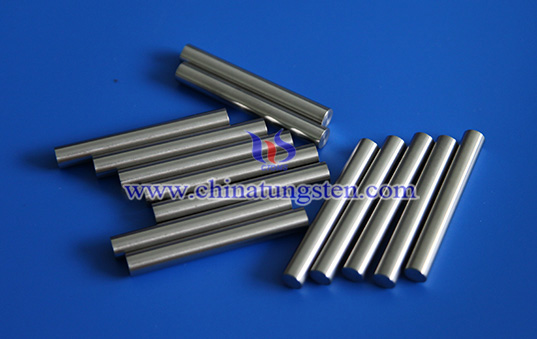
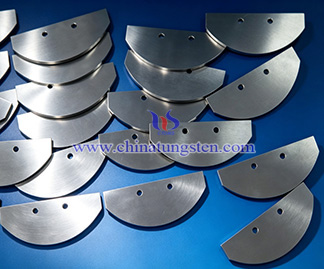
Tungsten alloy counterweight is typically made using tungsten (W) as the matrix and nickel (Ni), iron (Fe), or copper (Cu) as binder-phase elements through powder metallurgy. CTIA's tungsten alloy counterweights typically contain 90%–97% tungsten, with densities ranging from approximately 16.5 to 18.8 g/cm³. Different materials and grades offer different density, magnetic, and mechanical properties, making grade selection an important consideration for tungsten alloy counterweight applications.
1. Main Materials of CTIA's Tungsten Alloy Counterweight
There are two main material systems for tungsten alloy counterweights: tungsten-nickel-iron (W-Ni-Fe) and tungsten-nickel-copper (W-Ni-Cu). They differ in magnetic and mechanical properties and can be selected according to specific application requirements.
(1) W-Ni-Fe Alloys: These alloys offer high strength and good ductility and are generally ferromagnetic. They are suitable for conventional mechanical counterweights, moving-component balancing, and structural counterweight applications.
(2) W-Ni-Cu Alloys: These alloys are generally non-magnetic and are suitable for precision instruments and counterweight components requiring low magnetic response.
2. Common Grades of CTIA's Tungsten Alloy Counterweight
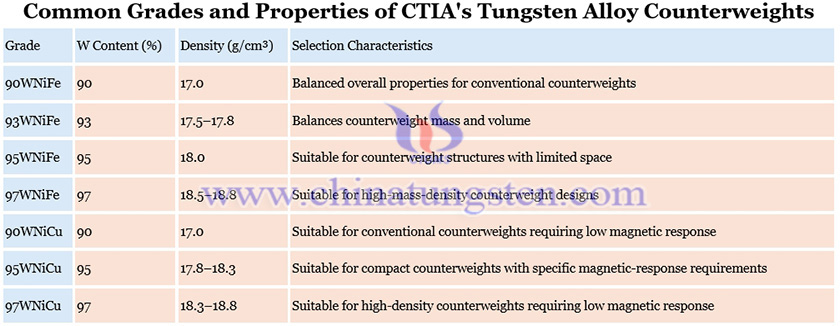
Tungsten alloy counterweight grades are generally distinguished by tungsten content and binder-phase system. Different grades offer different density ranges to meet the mass, volume, and structural requirements of counterweight products. Common grades and properties of tungsten alloy counterweights are shown in the picture below:
3. Selecting Materials and Grades for CTIA's Tungsten Alloy Counterweight
Selecting the right material and grade for tungsten alloy counterweight requires consideration of the required mass, available installation space, magnetic environment, load conditions, and machining accuracy.
(1) Mass and Space: The 95W and 97W series are suitable for evaluation when installation space is limited and higher density is needed. The 90W and 93W series can be considered when balancing mass, mechanical properties, and cost.
(2) Magnetic Properties: W-Ni-Fe alloys are suitable for conventional mechanical counterweights, while W-Ni-Cu alloys can be considered for equipment requiring low magnetic response. Specific magnetic permeability requirements should be verified.
(3) Structure and Operating Conditions: Material selection should account for load conditions, installation methods, and the operating environment, as well as the required density, mechanical properties, dimensional tolerances, and surface finish.
CTIA GROUP (CTIA) has nearly 30 years of experience in tungsten alloy manufacturing and expertise in powder metallurgy, precision machining, and quality inspection. CTIA provides material selection and customized machining solutions for tungsten alloy counterweights based on alloy system, tungsten content, density grade, magnetic properties, component structure, and dimensional accuracy, supporting mechanical balancing, mass adjustment, and precision equipment applications.
For any inquiry, please contact tungsten alloy manufacturer: CTIA GROUP
Email: sales@chinatungsten.com
Tel: 0086 592 5129696 / 0086 592 5129595
Website: tungsten-alloy.com
WeChat:

Related Products: