Tungsten Alloy Counterweight Core Q&A 50 Questions
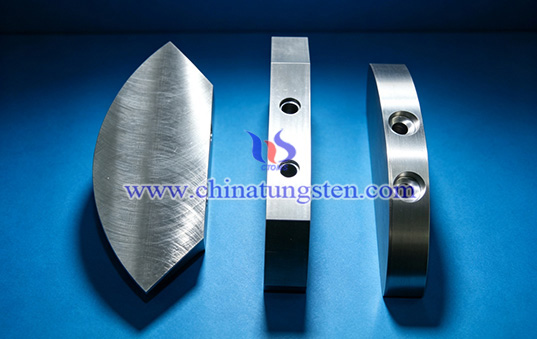
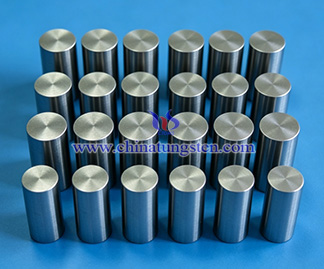
Tungsten Alloy Counterweight High-Traffic Core Q&A 50 Questions
I. Basic Knowledge About High-Density Tungsten Alloy Counterweights
What is a high-density tungsten alloy counterweight?
Why are tungsten alloys particularly suitable for counterweights?
What does high density actually mean?
What are the characteristics of W-Ni-Fe counterweights?
What are the characteristics of W-Ni-Cu counterweights?
Is higher density always better?
What is the difference between tungsten alloy counterweights and steel counterweights?
What is the difference between tungsten alloy counterweights and lead counterweights?
What a counterweight truly controls is the center of gravity, not simply weight.
Counterweights also involve moments.
Why is tungsten alloy used in dynamic balancing?
Why are industrial rotors particularly suitable for high-density counterweights?
Why does the aerospace field particularly value tungsten alloy counterweights?
Why is there so much attention on tungsten alloy counterweights in the automotive field?
Why do drones need high-density counterweights?
Why do golf clubs use tungsten alloy counterweights?
How are high-density tungsten alloy counterweights manufactured?
Why is machining still required after sintering?
Why is tungsten alloy relatively difficult to machine?
Why do counterweights need weight tolerance control?
Why are counterweight drawings very important?
How should the cost of tungsten alloy counterweights be understood?
How should a suitable high-density tungsten alloy counterweight be selected?
Q1 What Is a Tungsten Alloy Counterweight?
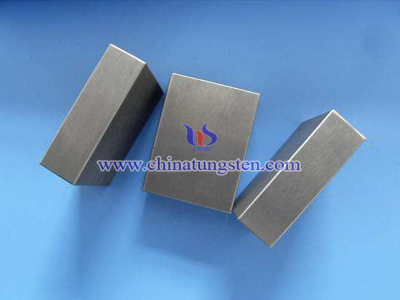
A tungsten alloy counterweight is a type of functional metal component made from a high-density tungsten-based heavy alloy (Tungsten Heavy Alloy), with tungsten (W, Tungsten) as the main constituent element and with the addition of metals such as nickel (Ni, Nickel), iron (Fe, Iron), and copper (Cu, Copper), manufactured according to specific mass, dimensions, center of gravity, moment of inertia, and installation requirements, and used to adjust the mass distribution, center-of-gravity position, rotational inertia, or dynamic balance state of equipment or structures. Unlike an ordinary metal block in the general sense, the core of a tungsten alloy counterweight is not simply to increase the weight of equipment, but to precisely configure a specified mass to a designated position within a limited space. Therefore, a tungsten alloy counterweight simultaneously belongs to the cross-disciplinary field of materials engineering, mechanical design, precision machining, and mass balance control as a functional component.
I. High Density Is the Most Basic Material Characteristic of Tungsten Alloy Counterweights
The most prominent feature of tungsten alloy counterweights is high density. The density of common engineering-grade high-density tungsten alloys is usually about 16.5–19.0 g/cm³, with the specific value depending on tungsten content, binder phase composition, powder characteristics, and sintering process. The density of some commonly used counterweight materials can reach about 17.0–18.5 g/cm³. The basic relationship among density ρ (Density), mass m (Mass), and volume V (Volume) is ρ=m/V, which can also be written as m=ρV and V=m/ρ. This means that, when the target mass is the same, the higher the material density, the smaller the volume required. For example, when designing a 1 kg counterweight: if a tungsten alloy with a density of 18.0 g/cm³ is used, its theoretical volume is approximately: V=1000/18.0≈55.6 cm³.
If ordinary steel with a density of about 7.85 g/cm³ is used, its volume is approximately: V=1000/7.85≈127.4 cm³. In other words, to achieve the same 1 kg counterweight mass, the space required by high-density tungsten alloy is significantly smaller than that required by ordinary steel. This is precisely one of the most important engineering values of tungsten alloy counterweights: obtaining the required mass with a smaller structural size when the internal space of equipment is limited.
II. A Tungsten Alloy Counterweight Is Not Equal to a Pure Tungsten Counterweight
III. The Real Function of a Tungsten Alloy Counterweight Is to Adjust Mass Distribution
The most basic engineering purpose of counterweight design is to change the mass distribution of a system…
IV. In Rotating Machinery, Tungsten Alloy Counterweights Also Perform a Balancing Function
V. Why Tungsten Alloy Counterweights Are Suitable for Equipment with Limited Space
VI. Typical Structural Forms of Tungsten Alloy Counterweights
There is no fixed external shape for tungsten alloy counterweights; rather, they are designed according to the specific equipment structure…
VII. How Tungsten Alloy Counterweights Are Usually Manufactured
VIII. Why Tungsten Alloy Counterweights Require Precision Machining
IX. Application Fields of Tungsten Alloy Counterweights
X. Why for High-Density Tungsten Alloy Counterweights, Higher Density Is Not Always Better
Although higher density can further reduce volume, engineering material selection cannot consider density alone…
XI. The Essential Difference Between Tungsten Alloy Counterweights and Traditional Counterweight Materials Such as Steel and Lead
XII. From the Perspective of Product Definition, a Tungsten Alloy Counterweight Is Actually a Comprehensive Design Result
Q2 In Which Fields Are Tungsten Alloy Counterweights Mainly Used?
The core of the application of tungsten alloy counterweights can be summarized in one sentence: to provide a relatively large concentrated mass within a limited installation space, and, by precisely controlling the position, weight, and geometric dimensions of the counterweight, to achieve center-of-gravity adjustment, mass balancing, rotational inertia control, dynamic balancing, vibration suppression, or inertia regulation. High-density tungsten alloys usually adopt material systems such as W-Ni-Fe or W-Ni-Cu, with engineering application densities commonly around 17–18.5 g/cm³, and there are also higher or lower density grades. Because their mass per unit volume is far higher than that of steel, they are particularly suitable for scenarios with requirements for space, mass distribution, or balancing accuracy in aerospace, automobiles and racing cars, industrial rotating machinery, precision instruments, drones, consumer electronics, sports equipment, and marine and energy equipment. Public engineering materials also list aerospace, automobiles, industrial machinery, sports equipment, oil and gas equipment, and other fields as important application directions for tungsten heavy alloy counterweights.
Aerospace Field
Automotive and Racing Fields
Automobiles are another important application field for tungsten alloy counterweights. Counterweight needs in traditional automobiles and high-performance automobiles mainly include crankshaft balancing, drivetrain balancing, wheel hub balancing, and local mass distribution adjustment. High-density tungsten alloys can be used for crankshaft counterweights, chassis counterweights, racing ballast blocks, and balancing components of some rotating mechanisms. Related material materials show that typical applications of tungsten heavy alloys include racing crankshafts and chassis counterweights…
Industrial Rotating Machinery Field
Precision Instruments and Inertial Systems
Drones and Aerial Robots
Mobile Phones and Consumer Electronics Products
This is a type of tungsten alloy counterweight application that ordinary consumers are relatively likely to encounter. Some mobile phones, vibration motors, electric toothbrushes, massagers, and other products need to generate vibration through an eccentric rotating mass…
Golf and Sports Equipment Field
Sports equipment is also an important application direction for tungsten alloy counterweights. The most typical is golf clubs. A golf club head can change the overall center-of-gravity position, swing weight, and inertia characteristics by adding local tungsten alloy mass. Because tungsten alloy has high density, a relatively large mass can be added within the limited space of the club head. In addition to golf clubs, tungsten alloys can also be used in darts, fishing gear, and other products…
Fishing and Underwater Equipment
The high-density characteristics of tungsten alloys also make them suitable for underwater counterweights requiring small volume and high mass. Examples include fishing counterweights, artificial bait counterweights, and ballast parts for some underwater equipment…
Marine Engineering and Shipbuilding Field
Oil, Natural Gas, and Downhole Tools
Medical Equipment and Precision Motion Equipment
Robots and Automation Equipment
Industrial robots, collaborative robots, and precision automation mechanisms also have counterweight needs. Robot joints, end effectors, and motion mechanisms generate inertial loads in different directions during movement…
Different Application Fields Actually Correspond to Different Counterweight Functions
Why These Fields Tend to Use Tungsten Alloys
How to Judge from an Application Perspective Whether Tungsten Alloy Counterweights Are Suitable
Whether a product is suitable for using tungsten alloys can be judged from several questions. If the equipment installation space is very limited while a relatively large mass is also required, then tungsten alloys have obvious advantages; if the counterweight needs to be installed at a position very close to the rotating shaft and a relatively large mass needs to be obtained through a smaller volume, then tungsten alloys are usually worth prioritizing for evaluation; if the equipment needs to precisely adjust the center of gravity, rotational inertia, or dynamic balance, high-density tungsten alloys are also suitable for consideration. Conversely, if the equipment space is very ample, the mass requirement is not high, the precision requirement is low, and the product is highly cost-sensitive, then low-cost materials such as steel may already be able to meet the demand, and the necessity of using tungsten alloys will be reduced. Therefore, tungsten alloy counterweights are not a universal substitute material for all counterweight products, but an engineering material mainly aimed at high-density, small-volume, precise mass distribution, and high-performance applications.
The main application fields of tungsten alloy counterweights can form a relatively clear industrial chain: aerospace → automobiles and racing cars → industrial rotating machinery → precision instruments and inertial systems → drones and robots → consumer electronics → sports equipment → marine and oil and gas equipment → special medical and precision equipment. Although the product forms in different fields differ greatly, the core needs always revolve around high-density mass configuration, center-of-gravity control, inertia adjustment, dynamic balancing, and space optimization.
Q3 Why Are Tungsten Alloys Suitable for Making Counterweights?
Tungsten alloys are suitable for making counterweights not only because of their high density, but because they can provide a relatively large mass within a limited space while, through alloy composition, density grade, geometric dimensions, and precision machining, enabling relatively precise control of mass distribution, center-of-gravity position, rotational inertia, and dynamic balance. These characteristics are especially important for components that are sensitive to space and mass distribution, such as automotive crankshafts, industrial rotors, aviation control surfaces, drones, and vibration mechanisms.
High Density Can Provide a Large Mass Within a Very Small Volume
This is the most direct advantage of tungsten alloys as counterweight materials. Common tungsten alloy counterweights usually use W-Ni-Fe or W-Ni-Cu systems. The density of engineering products is usually about 17–18.5 g/cm³, and the broader density range of tungsten heavy alloys can reach about 16.5–19.0 g/cm³, depending on tungsten content, binder phase composition, and manufacturing process. The actual ranges of different suppliers and grades are not entirely the same…
A Smaller Counterweight Can Achieve Center-of-Gravity Adjustment
It Is Particularly Valuable for the Dynamic Balancing of Rotating Components
Rotational Inertia Can Be Adjusted
Alloy Composition Can Be Adjusted According to Usage Requirements
Powder Metallurgy Is Suitable for Manufacturing Complex Small Counterweights
It Can Meet the High-Quality Counterweight Needs of Small Electronic Devices
It Is Suitable for Occasions Sensitive to Space and Mass Control, Such as Aerospace
Precision Machining Can Further Control the Mass and Position of the Counterweight
More details are available in the document below.
Tungsten Alloy Counterweight Core Q&A 50 Questions List:
I. Basic Understanding and Core Search Terms
Q1 What is a tungsten alloy counterweight?
Q2 In which fields are tungsten alloy counterweights mainly used?
Q3 Why is tungsten alloy suitable for making counterweights?
Q4 What is the density of tungsten alloy counterweights usually?
Q5 Why can tungsten alloy counterweights reduce volume?
Q6 What is the difference between tungsten alloy counterweights and steel counterweights?
Q7 What is the difference between tungsten alloy counterweights and lead counterweights?
Q8 What advantages do tungsten alloy counterweights have compared with pure tungsten?
II. Density, Weight, and Calculation
Q9 How is the density of a tungsten alloy counterweight calculated?
Q10 How is the weight of a tungsten alloy counterweight calculated?
Q11 Given density and volume, how is the weight of a tungsten alloy counterweight calculated?
Q12 What volume is required for a 10-gram tungsten alloy counterweight?
Q13 What volume is required for a 100-gram tungsten alloy counterweight?
Q14 What volume is required for a 1-kilogram tungsten alloy counterweight?
Q15 What is the difference between 17.5 g/cm³ and 18.0 g/cm³ tungsten alloys?
Q16 What is the difference between 18.0 g/cm³ and 18.5 g/cm³ tungsten alloys?
III. Material Selection
Q17 What elements are tungsten alloy counterweights usually composed of?
Q18 What material is W-Ni-Fe (Tungsten-Nickel-Iron)?
Q19 What material is W-Ni-Cu (Tungsten-Nickel-Copper)?
Q20 What is the difference between W-Ni-Fe and W-Ni-Cu?
Q21 What effect does tungsten content have on tungsten alloy counterweights?
Q22 Are high-density tungsten alloy counterweights necessarily better?
IV. Price, Procurement, and Customization
Q23 How much does a tungsten alloy counterweight cost per kilogram?
Q24 Why are tungsten alloy counterweights more expensive than steel counterweights?
Q25 What factors mainly affect the price of tungsten alloy counterweights?
Q26 Does a higher density of a tungsten alloy counterweight mean a higher price?
Q27 Why is the unit price of small-batch tungsten alloy counterweights higher?
Q28 How can the cost of large-batch procurement of tungsten alloy counterweights be reduced?
Q29 What drawing information is required for customizing tungsten alloy counterweights?
Q30 What technical parameters are required for inquiring about tungsten alloy counterweights?
Q31 How can quotes for tungsten alloy counterweights from different suppliers be compared?
Q32 How to choose a tungsten alloy counterweight OEM (Original Equipment Manufacturer
V. Processing and Manufacturing
Q33 How are tungsten alloy counterweights manufactured?
Q34 Why do tungsten alloy counterweights usually use powder metallurgy?
Q35 Can tungsten alloy counterweights be turned?
Q36 Can tungsten alloy counterweights be milled?
Q37 Can tungsten alloy counterweights be drilled?
Q38 Can tungsten alloy counterweights be tapped?
Q39 Why do tungsten alloy counterweights easily wear cutting tools?
Q40 How are dimensional tolerances controlled in the processing of tungsten alloy counterweights?
VI. Automotive, Aviation, and Rotating Machinery
Q41 Why do automobiles use tungsten alloy counterweights?
Q42 What is the function of a tungsten alloy crankshaft counterweight?
Q43 Why do racing cars use tungsten alloy counterweights?
Q44 Why do aircraft use tungsten alloy counterweights?
Q45 Why do aircraft control surfaces need tungsten alloy counterweights?
Q46 Why do drones use tungsten alloy counterweights?
Q47 How are tungsten alloy counterweights used in industrial rotors?
Q48 How are tungsten alloy counterweights subjected to dynamic balancing tests?
VII. Consumer Electronics, Sports, and Civil Use
Q49 Why do mobile phones use tungsten alloy vibration counterweights?
Q50 Why do golf clubs use tungsten alloy counterweights?
Read More: Tungsten Alloy Counterweight Core Q&A 50 Questions.pdf
For any inquiry, please contact tungsten alloy manufacturer: CTIA GROUP
Email: sales@chinatungsten.com
Tel: 0086 592 5129696 / 0086 592 5129595
Website: tungsten-alloy.com
WeChat:

Related Products: