What's Tungsten Alloy Counterweight?
1. What's Tungsten Alloy Counterweight?
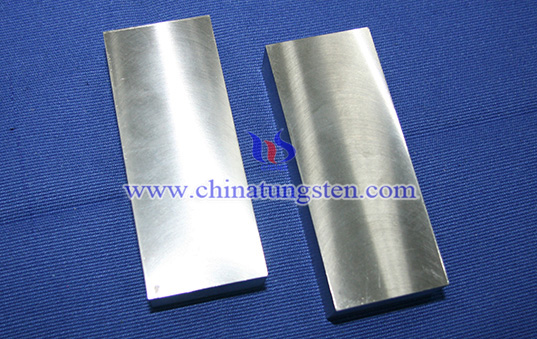
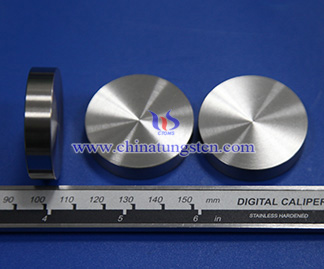
Tungsten alloy counterweight is a high-density weight component made using tungsten as the matrix and nickel-iron or nickel-copper as the binder phase through powder metallurgy. CTIA's tungsten alloy counterweight features high density, compact size, and high hardness, helping add localized mass, adjust the center of gravity, and improve mass distribution. It can be machined into blocks, rods, balls, plates, and customized components according to equipment weight requirements, available installation space, and structural design.
2. Material Composition and Types of CTIA's Tungsten Alloy Counterweight
Tungsten alloy counterweights typically contain 90%–97% tungsten and have a density of approximately 16.5–18.8 g/cm³. Tungsten forms the main matrix, while nickel and iron or nickel and copper serve as binder phases. Based on the binder system, tungsten alloy counterweights are mainly classified into tungsten-nickel-iron (W-Ni-Fe) alloys and tungsten-nickel-copper (W-Ni-Cu) alloys. These two material systems differ in magnetic properties, mechanical performance, and suitable operating conditions. Their specific properties depend on alloy composition, tungsten content, and manufacturing processes.
3. Features of CTIA's Tungsten Alloy Counterweight
(1) High Density, Space Efficiency: A density of approximately 16.5–18.8 g/cm³, significantly higher than that of steel, copper, and lead, allows a smaller volume at the same weight, making tungsten alloy suitable for equipment with limited installation space.
(2) High Mechanical Strength, Good Wear Resistance: High mechanical strength, hardness, and a degree of toughness help the material withstand mechanical loads during equipment operation. Specific performance depends on the alloy grade and processing condition.
(3) Selectable Magnetic Properties for Different Equipment Requirements: W-Ni-Fe alloys typically exhibit weak ferromagnetism, while W-Ni-Cu alloys are generally non-ferromagnetic or have a low magnetic response. The material can be selected according to the equipment's magnetic permeability requirements.
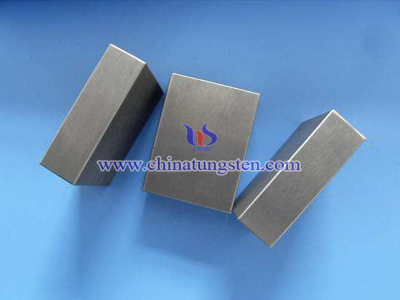
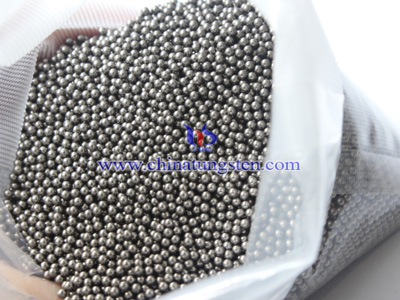
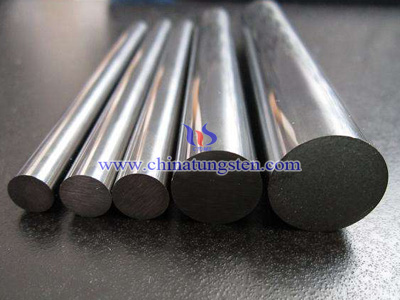
(4) Flexible Structures, Controlled Dimensional Accuracy: Available in tungsten alloy blocks, rods, balls, plates, and custom-shaped components, tungsten alloy counterweights can be precision-machined to control dimensions, hole positions, threads, and mounting features in accordance with drawings, meeting different equipment assembly and counterweight requirements.
4. Manufacturing Process of CTIA's Tungsten Alloy Counterweight
CTIA produces tungsten alloy counterweights using powder metallurgy. First, tungsten powder and binder metal powders are proportioned and mixed to achieve the target alloy grade. The mixture is then formed by die pressing or cold isostatic pressing, followed by high-temperature liquid-phase sintering to create a dense alloy structure. The sintered blanks undergo precision machining, including turning, milling, drilling, and grinding, to achieve the required external profiles, hole positions, threads, and mounting features. Finally, CTIA inspects finished products for density, dimensional tolerances, surface quality, and other specified characteristics according to requirements to verify conformity with the applicable quality standards.
5. Applications of CTIA's Tungsten Alloy Counterweight
CTIA's tungsten alloy counterweights are widely used in the following equipment and industries:
(1) Aerospace: Used in aircraft, satellites, Unmanned Aerial Vehicles (UAVs), and rockets for mass balancing and attitude control.
(2) Transportation: Used as counterweights in automobiles, race cars, and ships to configure mass distribution, adjust the center of gravity, and improve operational balance.
(3) Industrial Automation and Precision Equipment: Used in machine tools, robots, centrifuges, steam turbines, optical equipment, and precision instruments to improve mass distribution and reduce vibration caused by imbalance.
(4) Medical Equipment: Used in Computed Tomography (CT), Magnetic Resonance Imaging (MRI), and radiotherapy equipment for counterweight applications.
(5) Precision Electronics and Consumer Devices: Used in mobile phones, cameras, gimbals, and watches to adjust mass distribution and improve structural balance.
(6) Oil Drilling and Logging Equipment: Used in drilling weight bars, logging instruments, and inclinometers as counterweight components.
(7) Sporting Goods: Used in golf clubs, darts, fishing tackle, tennis rackets, badminton rackets, and fitness equipment to adjust weight distribution and handling characteristics.
CTIA GROUP (CTIA) draws on nearly 30 years of experience in tungsten alloy manufacturing, supported by capabilities in powder metallurgy, precision machining, and quality inspection. CTIA provides customized tungsten alloy counterweight solutions covering material selection, structural design, and precision machining, based on target weight, density grade, material system, magnetic requirements, dimensional tolerances, installation space, and structural characteristics. These solutions address diverse counterweight needs in aerospace, transportation, industrial automation, medical equipment, precision electronics, oil drilling, and sporting goods.
For any inquiry, please contact tungsten alloy manufacturer: CTIA GROUP
Email: sales@chinatungsten.com
Tel: 0086 592 5129696 / 0086 592 5129595
Website: tungsten-alloy.com
WeChat:

Related Products: