Tungsten Alloy Gyroscope Counterweight
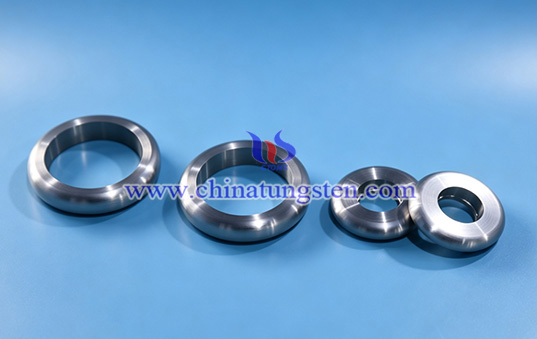
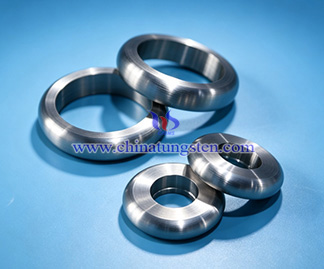
1. What's Tungsten Alloy Gyroscope Counterweight?
Tungsten alloy gyroscope counterweight is tungsten alloy mass-adjustment component installed on a gyroscope rotor or balancing structure. It typically contains 90%–97% tungsten with nickel, iron, or copper additions and is produced through powder metallurgy. CTIA's tungsten alloy gyroscope counterweight adjusts rotor mass distribution, moment of inertia, and center-of-gravity position to achieve the required dynamic balance during high-speed rotation and reduce vibration caused by imbalance.
2. Features of CTIA's Tungsten Alloy Gyroscope Counterweight
(1) High Density, Smaller Size: Density is approximately 16.5–18.5 g/cm³, requiring less volume for the same mass and making it suitable for compact spaces inside gyroscopes.
(2) Stable Mass, Easy Balance Adjustment: Stable material density allows rotor mass distribution to be adjusted through counterweight size, shape, and installation position for corrections to moment of inertia, center of gravity, and dynamic balance.
(3) Dimensional Stability, Low Thermal Effect: The coefficient of linear thermal expansion is approximately 4.4–5.5×10⁻⁶/K, resulting in small dimensional changes with temperature variations and helping maintain a stable counterweight position.
(4) High Strength, Rotational Load Resistance: Tensile strength can typically reach 700–1200 MPa, enabling the counterweight to withstand centrifugal loads generated by high-speed rotor rotation and vibration during operation.
(5) Selectable Magnetic Properties: W-Ni-Cu is non-magnetic and suitable for gyroscope structures with strict magnetic-environment requirements, while W-Ni-Fe has a certain magnetic response and suits general counterweight structures.
3. Applications of CTIA's Tungsten Alloy Gyroscope Counterweight
(1) Aerospace: Used in gyroscope rotors and balancing structures of aircraft, satellites, and spacecraft to adjust counterweight mass and position and improve rotor center-of-gravity position and dynamic balance.
(2) Navigation and Guidance: Used in inertial navigation systems, guidance systems, and related gyroscope components to adjust rotor mass, moment of inertia, and rotational balance.
(3) Unmanned Aerial Vehicles (UAVs): Used in onboard gyroscopes and inertial components to correct mass distribution and dynamic balance in rotating components.
(4) Ships and Underwater Equipment: Used in gyrocompasses and related inertial equipment to adjust mass distribution and center-of-gravity position in rotating components.
(5) Precision Testing: Used for gyroscope rotor balancing, moment-of-inertia testing, and inertial-device calibration, providing counterweight adjustment for testing different mass properties.
4. Specifications of CTIA's Tungsten Alloy Gyroscope Counterweight
(1) Material: W-Ni-Fe, W-Ni-Cu
(2) Tungsten Content: 90%–97%
(3) Density: 16.5–18.5 g/cm³
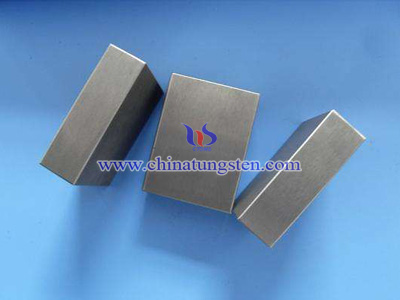
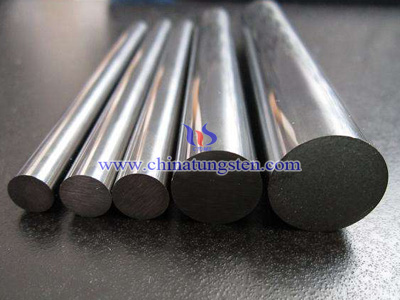
(4) Product Forms: Tungsten alloy rings, discs, cylinders, blocks, sectors, and irregular parts
(5) Dimensions: Customizable
(6) Surface Condition: Precision-ground, polished, customizable
CTIA GROUP (CTIA) has nearly 30 years of experience in tungsten alloy manufacturing, with mature capabilities in powder metallurgy, precision machining, and quality inspection. CTIA maintains strict control of material composition, density, dimensions, and weight throughout production and serves customers in China and international markets through technical consultation, sample trials, customized production, and batch orders.
For any inquiry, please contact tungsten alloy manufacturer: CTIA GROUP
Email: sales@chinatungsten.com
Tel: 0086 592 5129696 / 0086 592 5129595
Website: tungsten-alloy.com
WeChat:

Related Products: