Tungsten Alloy Ring Counterweight
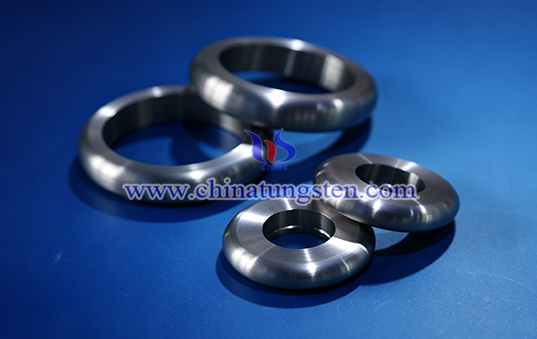
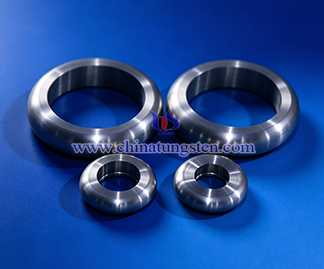
1. What's Tungsten Alloy Ring Counterweight?
Tungsten alloy ring counterweight is ring-shaped mass-balancing component made from tungsten-based heavy alloy with nickel-iron or nickel-copper as the binder phase, mainly used for equipment mass compensation, center-of-gravity adjustment, rotational balancing, and moment-of-inertia control. CTIA's tungsten alloy ring counterweight is designed around high density, relatively high strength, and concentrated mass of tungsten alloy, with the ring geometry providing coaxial mounting and balanced mass distribution for rotating bodies, dynamic balancing of rotating mechanisms, and equipment components requiring precise coaxial balance.
2. Features of CTIA's Tungsten Alloy Ring Counterweight
(1) High Specific Gravity and Concentrated Mass: Density is typically 16.5–18.8 g/cm³, enabling greater mass concentration within smaller volume to meet counterweight needs of compact structures.
(2) Ring Design for Coaxial Counterweighting: Mass is arranged circumferentially along shafts or rotating components to maintain coaxial relationship between the counterweight and the rotation center, suitable for mass configuration of rotating components.
(3) Structural Stability and Good Vibration Resistance: Offers relatively high strength and wear resistance, capable of withstanding mechanical loads and continuous vibration generated during rotation, suitable for long-term operating mechanical components.
(4) Dimensional Stability and Small Thermal Deformation: Coefficient of thermal expansion is typically about 4.5–6.0×10⁻⁶/°C. Dimensional change under temperature variation is small, helping maintain fit between the ring and mounting components.
3. Applications of CTIA's Tungsten Alloy Ring Counterweight
(1) Automotive and Racing: Applied in engine crankshafts, drive shafts, flywheels, hubs and other rotating components.
(2) Aerospace and Drones: Applied in helicopter rotors, rotating actuators, inertial navigation platforms and drone gimbals.
(3) Robotics and Automation Equipment: Applied in robot rotating joints, servo motor rotors and rotating actuators.
(4) Precision Machinery and Instruments: Applied in high-speed spindles, precision rotating mechanisms and optical rotating components.
(5) Industrial and Fluid Equipment: Applied in motor rotors, centrifuge rotating bodies, fans, pumps and other rotating components.
(6) Ships and Ocean Engineering: Applied in ship shafting, propeller shafts and underwater rotating equipment.
4. Specifications of CTIA's Tungsten Alloy Ring Counterweight
(1) Materials: W-Ni-Fe, W-Ni-Cu
(2) Tungsten Content: Typically 90%–97%
(3) Density: 16.5–18.8 g/cm³
(4) Dimensions: Customizable
CTIA GROUP has nearly 30 years of tungsten alloy manufacturing experience, with established capabilities in powder metallurgy and precision machining. CTIA designs and customizes tungsten alloy rings according to the required mass, density, dimensions, dimensional tolerances, and installation configuration, providing tailored counterweight solutions for rotating machinery, automotive, aerospace, precision instruments, and automation equipment.
For any inquiry, please contact tungsten alloy manufacturer: CTIA GROUP
Email: sales@chinatungsten.com
Tel: 0086 592 5129696 / 0086 592 5129595
Website: tungsten-alloy.com
WeChat:

Related Products: