Tungsten Alloy MRI Equipment Counterweight
1. What's Tungsten Alloy MRI Equipment Counterweight?
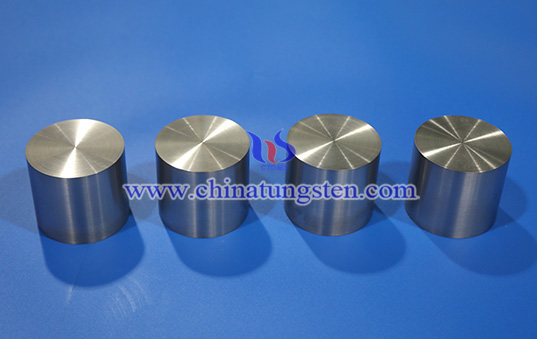
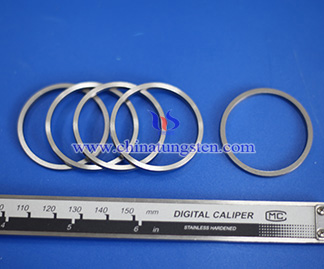
Tungsten alloy MRI equipment counterweight is high-density balancing component used in Magnetic Resonance Imaging (MRI) systems and their auxiliary mechanical equipment, primarily for mass compensation and torque balancing. CTIA's tungsten alloy counterweight uses a non-magnetic W-Ni-Cu alloy system, featuring high density, very low magnetic permeability, lead-free material, and high machining precision. It concentrates substantial mass within the strong magnetic field environment of MRI systems to balance gravitational torque and vibration in scanning tables, movable cantilevers, and auxiliary gradient-coil mechanisms without interfering with the imaging magnetic field, supporting stable and safe equipment operation.
2. Features of CTIA's Tungsten Alloy MRI Equipment Counterweight
(1) Very Low Magnetic Permeability for Strong Magnetic Fields: The non-magnetic W-Ni-Cu tungsten alloy system has a relative permeability close to 1 and low magnetic response, helping reduce magnetization risk in strong magnetic fields and minimize potential effects on magnetic-field uniformity and image quality.
(2) High Density, Space Saving: With a density of 16.5–18.8 g/cm³, it provides substantial concentrated mass within narrow installation spaces inside magnet housings, cantilevers, and frames to meet mass compensation and torque balancing requirements.
(3) Lead-Free and Non-Toxic: The lead-free tungsten alloy contains no lead or radioactive substances and, when meeting applicable RoHS and REACH requirements, reduces the heavy-metal contamination risks associated with conventional lead counterweights in medical environments.
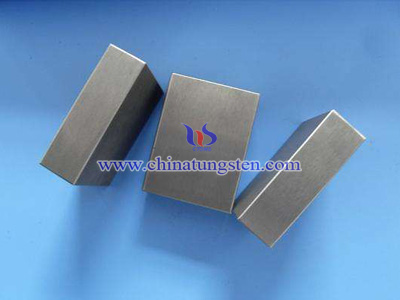
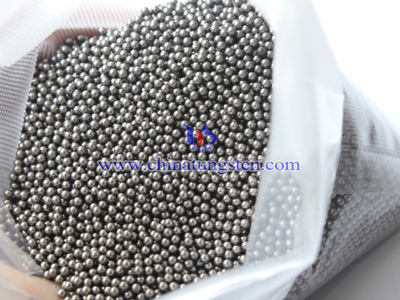
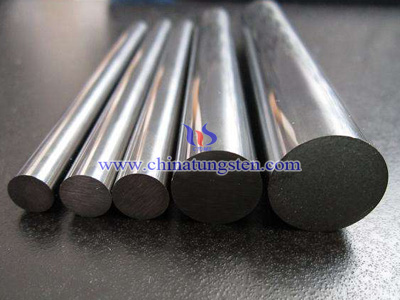
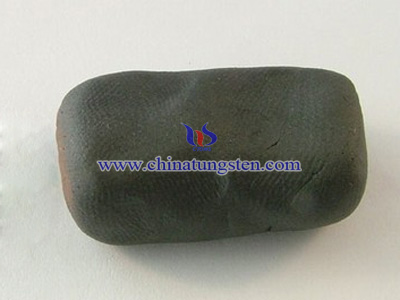
(4) Flexible Structures, Easy Precision Installation: Available as counterweight blocks, rods, rings, plates, and irregular parts, with holes, slots, and other machining features to meet the assembly and fixation requirements of different mechanical components.
(5) Corrosion and Wear Resistance for Long-Term Operation: It offers good corrosion and wear resistance and, with appropriate surface treatment, can withstand routine cleaning and disinfection environments while maintaining dimensional and mass stability during continuous mechanical movement.
3. Applications of CTIA's Tungsten Alloy MRI Equipment Counterweight
(1) MRI Scanning Table Balancing Mechanisms: Used in scanning table movement, lifting, and support structures to compensate for gravitational torque generated by the table and load, improving force balance during operation.
(2) MRI Coil Support Mechanisms: Used as counterweights for coils, accessories, and support arms to balance cantilever loads and reduce the driving force required for positioning and adjustment mechanisms.
(3) MRI Auxiliary Positioning Mechanisms: Used in auxiliary mechanical structures with movement, swinging, or adjustment functions to optimize the center of gravity and operational stability through appropriate counterweight placement.
4. Specifications of CTIA's Tungsten Alloy MRI Equipment Counterweight
(1) Material: W-Ni-Cu
(2) Tungsten Content: 90%–97%
(3) Density: 16.5–18.8 g/cm³
(4) Relative Magnetic Permeability: μr ≤ 1.005
(5) Dimensions: Customizable
(6) Surface Treatment: Precision machining, nickel plating, and epoxy resin coating
Backed by nearly 30 years of tungsten alloy manufacturing experience, CTIA GROUP (CTIA) has capabilities in material preparation, powder metallurgy, and precision machining. CTIA provides tungsten alloy counterweights in blocks, rods, rings, plates, and complex irregular forms, with precision machining and quality control covering density, dimensional precision, mass deviation, and surface quality for MRI equipment applications.
For any inquiry, please contact tungsten alloy manufacturer: CTIA GROUP
Email: sales@chinatungsten.com
Tel: 0086 592 5129696 / 0086 592 5129595
Website: tungsten-alloy.com
WeChat:

Related Products: